 Projects
Selma Šabanović
Associate Professor, School of Informatics and Computing
Indiana University
Recent News
Paper to be presented at RSS 2015
My student Marlena Fraune will be presenting our paper titled "Three's company, or a crowd?: The effects of robot number and behavior on HRI in Japan and the USA", co-authored with Satoru Kawakami, Ravindra DaSilva, and Michio Okada, at the Robotics: Science and Systems (RSS 2015) conference in July 2015.
Best paper nomination at HRI'15
My paper titled "Rabble of Robots Effects: Number and Form of Robots Modulates Attitudes, Emotions, and Stereotypes", co-authored with Marlena Fraune, Steven Sherrin, and Eliot Smith, was one of two nominees for the Best Enabling Experimental Study award at HRI'15.
Presentations at HRI'15
In March 2015, I co-chaired a workshop on "HRI Education: How to design and teach courses in Human-Robot Interaction" with Carlotta Berry and Cindy Bethel. I also participated as a panelist in the HRI'15 Conference Panel on "Human-Robot Interaction: Law on the Home Front" along with Laurel Riek, Peter Kahn, Gerhard Sagerer, Drew Simshaw, and Ryan Calo. Two of my students, Marlena Fraune and Wan-Ling Chang, presented our papers at the conference.
Visiting Professor at Bielefeld University
I was invited to spend Summer 2015 as a Visiting Professor at Bielefeld University's Cluster of Excellence Center in Cognitive Interaction Technology (CITEC). During my time there, I gave a graduate seminar and two public colloquium talks.
Received the SOIC Faculty Service Award
The School of Informatics and Computing presented me with an award for my contributions to university and community service in Spring 2015.
Received IU's Outstanding Junior Faculty Award
In March 2014, I was chosen to receive IU's Outstanding Junior Faculty Award, which recognizes pre-tenure faculty who have begun to develop nationally recognized research programs and devoted productive time to teaching and service.
Three papers presented at HRI'14
Three papers from my R-House Lab were presented at HRI'14, including "Culturally Variable Preferences for Robot Design and Use in South Korea, Turkey, and the United States" as a full paper, "Designing Robots in the Wild: In situ prototype evaluation for a break management robot" as a Journal of HRI paper from the Special Issue on Design in HRI, and "Towards Culturally Robust Robots: A Critical Social Perspective on Robotics and Culture" at the workshop on Workshop on Culture Aware Robotics.
Presenting an invited talk at the HRI'14 Workshop on Socially assistive robots
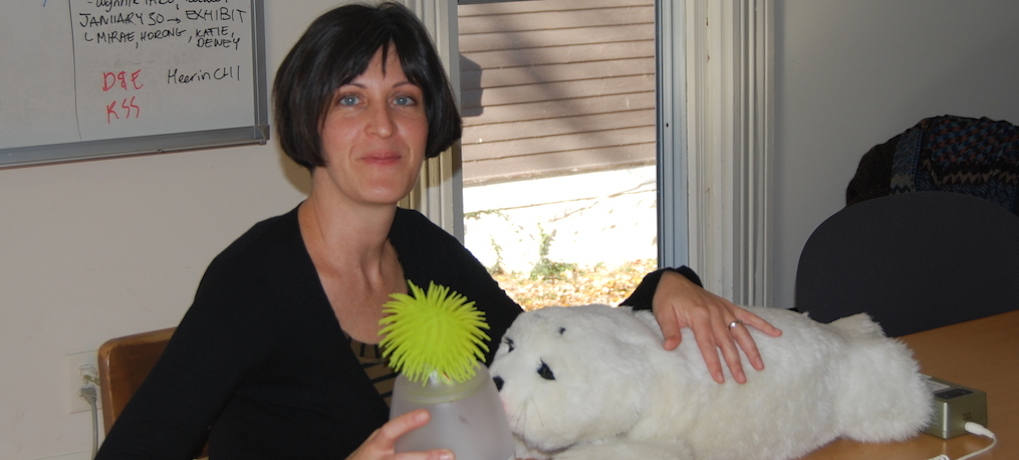
I will present our studies on the use of socially assistive robot PARO in the USA at the HRI'14 workshop on Socially assistive robots for the aging population: Are we trapped in stereotypes?.
Presented an invited talk at the International Conference: "Going Beyond the Laboratory — Ethical and Societal Challenges for Robotics" (GBTL)
Gave a talk on "Socializing Robots: Incorporating Users and Situated Interaction in Robot Development" at GBTL.
Paper published in Social Studies of Science
My paper "Inventing Japan's "Robotics Culture": The repeated assembly of science, technology, and culture in social robotics" was published in Social Studies of Science and is available SSS Online First.