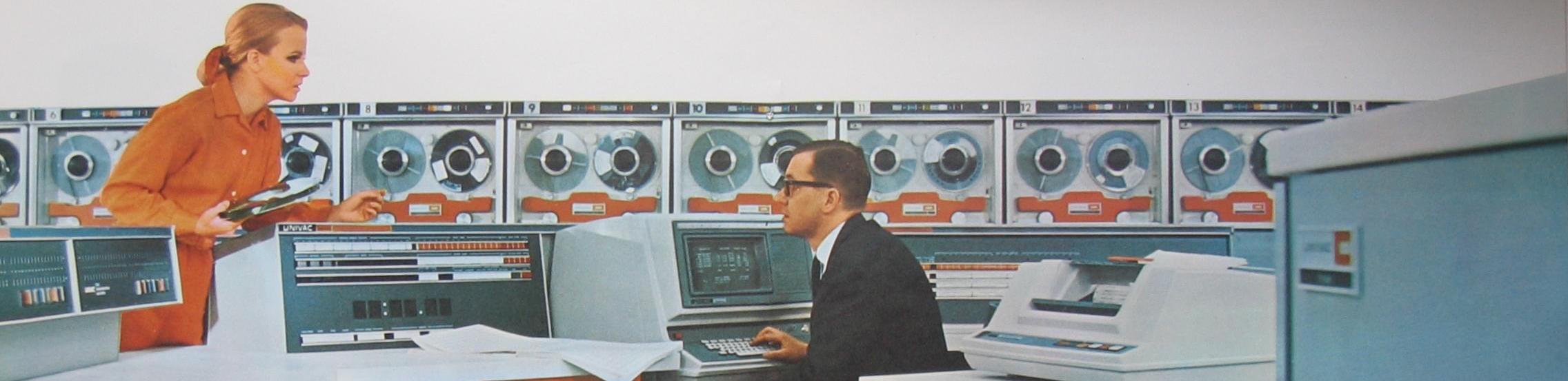
Now in Italian and Japanese!
January 03, 2024 #publications
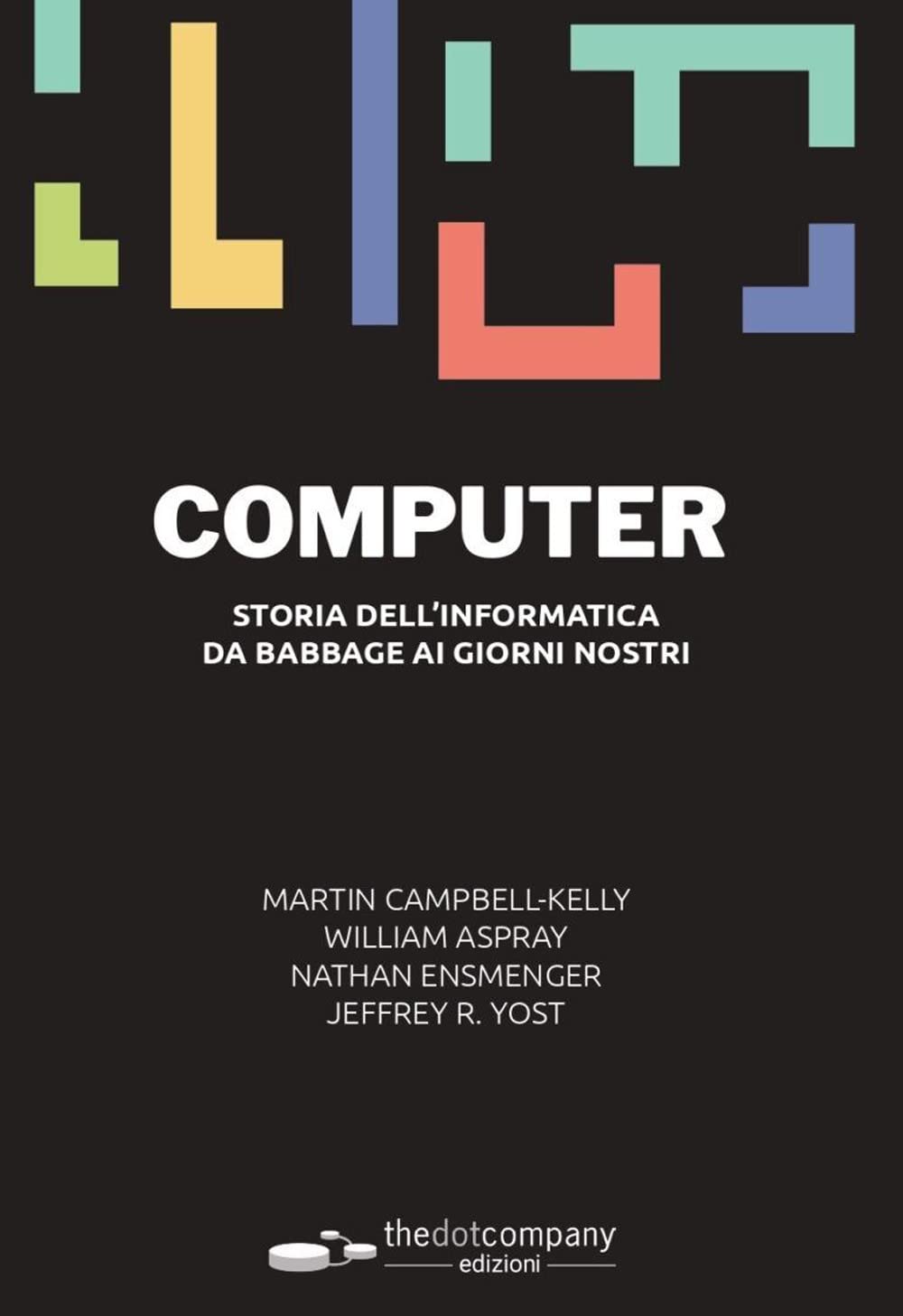
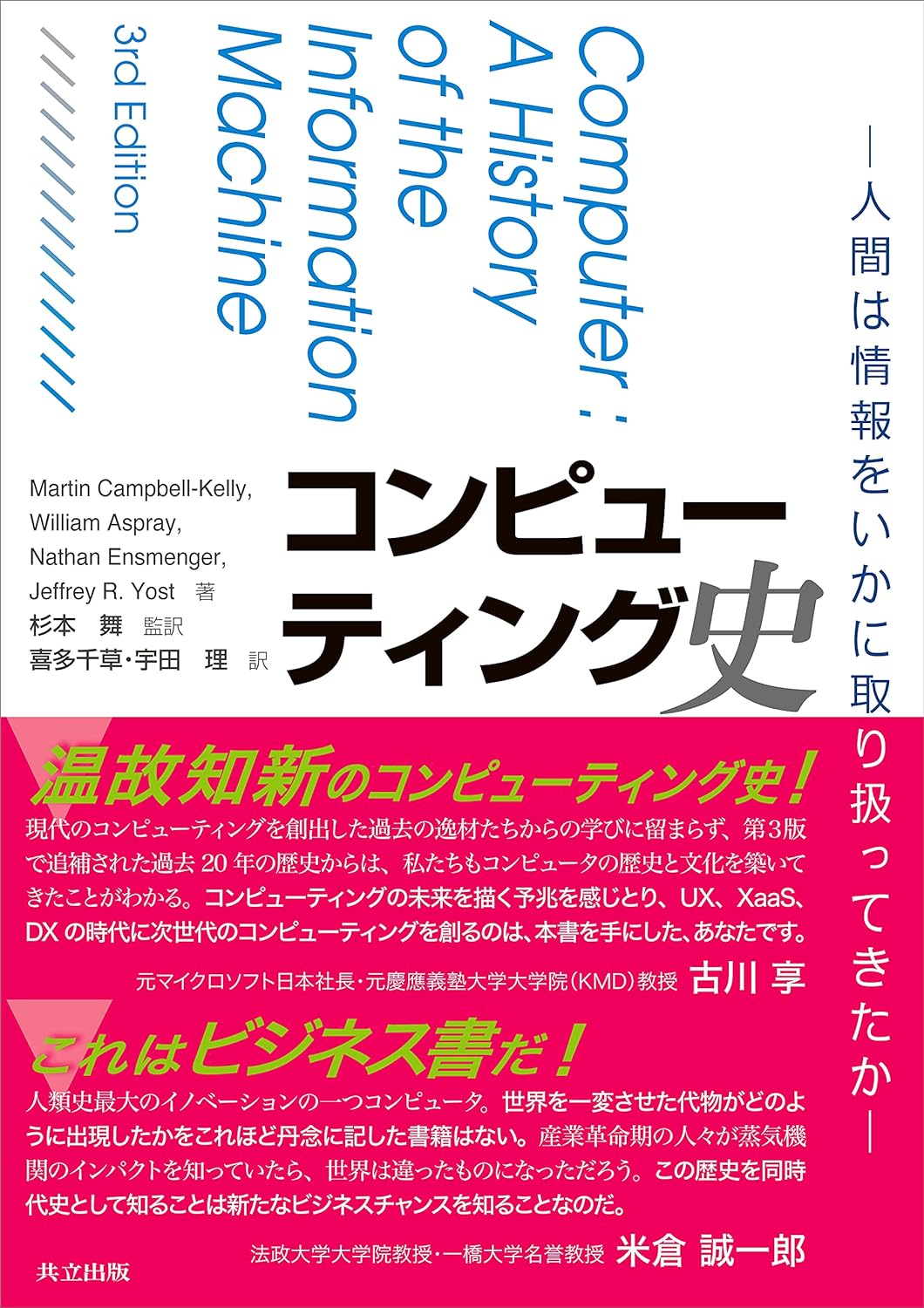
I am pleased to note that the 3rd Edition of our book Computer: A History of the Information Machine has been translated into Italian and Japanese. And so, if you can read those languages, you can now order Computer. Storia dell’informatica da Babbage ai nostri giorni and コンピューティング史 人間は情報をいかに取り扱ってきたか.
Granfalloon! (it's a Vonnegut thing...)
May 15, 2023 #media
I am excited to be a small part of the upcoming Granfalloon Festival hosted by the IU Arts and Humanities Council. What is a Granfalloon, you might ask? According to Wikipedia, it is an element of the fictional religion of Bokononism created by Kurt Vonnegut in his 1963 novel Cat’s Cradle and is a group of people who pretend to get together for a “shared identity or purpose, but whose mutual association is meaningless.” Which as a name for a festival whose ostensible shared purpose is to celebrate the life and work of Kurt Vonnegut is absolutely perfect.
My role in the festivities is a public discussion of Vonnegut’s 1952 novel Player Piano. This is a wonderful novel that I used to teach regularly, and given its themes of automation and technological-driven unemployment, it is highly relevant to the current moment. My talk is part of an open event at the Wonderlab Museum of Science, Health, and Technology on Saturday, May 20 from 7:30-9pm. Tickets can be ordered here. My contribution is entitled “From Player Piano to the AI Revolution, a history of labor in the computer age?”
The much more exciting participants at Granfalloon 2023 include Ted Chiang and the Flaming Lips…
Fall 2022 semester
July 26, 2022 #teaching
The fall semester is rapidly approaching, and I am looking forward to teaching my I222: The Information Society and my I400: Computing and the Environment courses. Both courses have been updated extensively recently, which is exciting!
Black History Month and the History of Computing
February 23, 2022 #research
In celebration of Black History Month, I have been reflecting on what my scholarship might have to say about the history of African American computer programmers. On the website on the history of computer programming that developed out of my first book, I have written about some exciting recent works in the scholarship on Black programmers.
Roblox!
October 26, 2021 #media
One of the most rewarding creative challenges I have as a scholar is figuring out ways to communicate my research to experts in industry. I was invited to give a talk to software developers at the game company Roblox sponsored by Women@Roblox and LGBTQIA@Roblox about my work on gender representations in the history of programming. Not only is this a wonderful opportunity to speak to people in a position to make a difference, but my children are (for a rare change) super-impressed!
Empowering Diverse STEM Innovators
October 23, 2021 #media
I am pleased and honored to be part of the Louis Stokes Midwest Regional Center of Excellence conference on Empowering Diverse STEM Innovators to be held virtually from October 22-24.
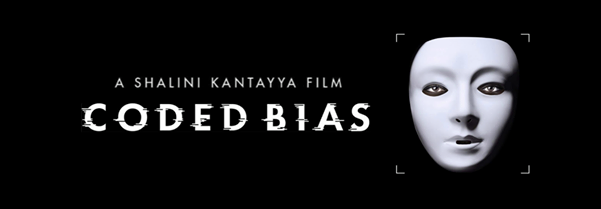
My small contribution to the conference is to moderate a discussion with the director Shalini Kantayya about her extraordinary documentary Coded Bias, which explores the way in which historical patterns of racial bias are being reconstructed and reified within the AI algorithms used for facial recognition. I have seen this film several times now, and every time I watch it see more in it that is informative, challenging, and disturbing.